
How to Check for a Warrant in Lee County
Lee County posts no online list that settles every warrant question. The state's own Georgia warrant guidance sends people to the local sheriff and tells them to have a first name, last name, date of birth, and county in hand. The Lee County Sheriff's Office lists (229) 759-6012 as its non-emergency number. Treat it as a routing contact rather than a dedicated warrant line. A clerk may also ask for a citation or case number, plus the name of the court involved. Use official channels privately, and think about talking to a lawyer before you act on a possible warrant. Georgia itself warns that walking in to ask can end in immediate custody. So call first. Ask whether the office gives direction by phone, whether you must show identification, and which court actually controls the order.
- Read the ticket, summons, bond paper, or notice and identify the issuing court.
- Call the sheriff’s non-emergency line for county law-enforcement direction, or call the named court clerk.
- For county warrant applications, bond, or preliminary-hearing questions, contact Magistrate Court at (229) 759-6016 or (229) 759-6031.
- For a Superior Court criminal warrant record, contact the Clerk of Superior Court at (229) 759-6018. For a city citation or failure to appear, contact that municipal court.
- If a defined non-exempt record is needed, use the sheriff’s NextRequest portal. Ask a lawyer how to address an active order.
Lee County Has No Online Warrant List
The sheriff-linked Citizen Connect menu offers daily reports, incident search, arrest search, accident search, and inmate confinement information. There is no warrant tab. That gap matters. An arrest entry shows a reported arrest, and a confinement entry reflects jail custody, but neither result tells you whether a Lee County warrant is active, recalled, sealed, or still enforceable. The Citizen Connect menu lays out the choices the public actually gets.
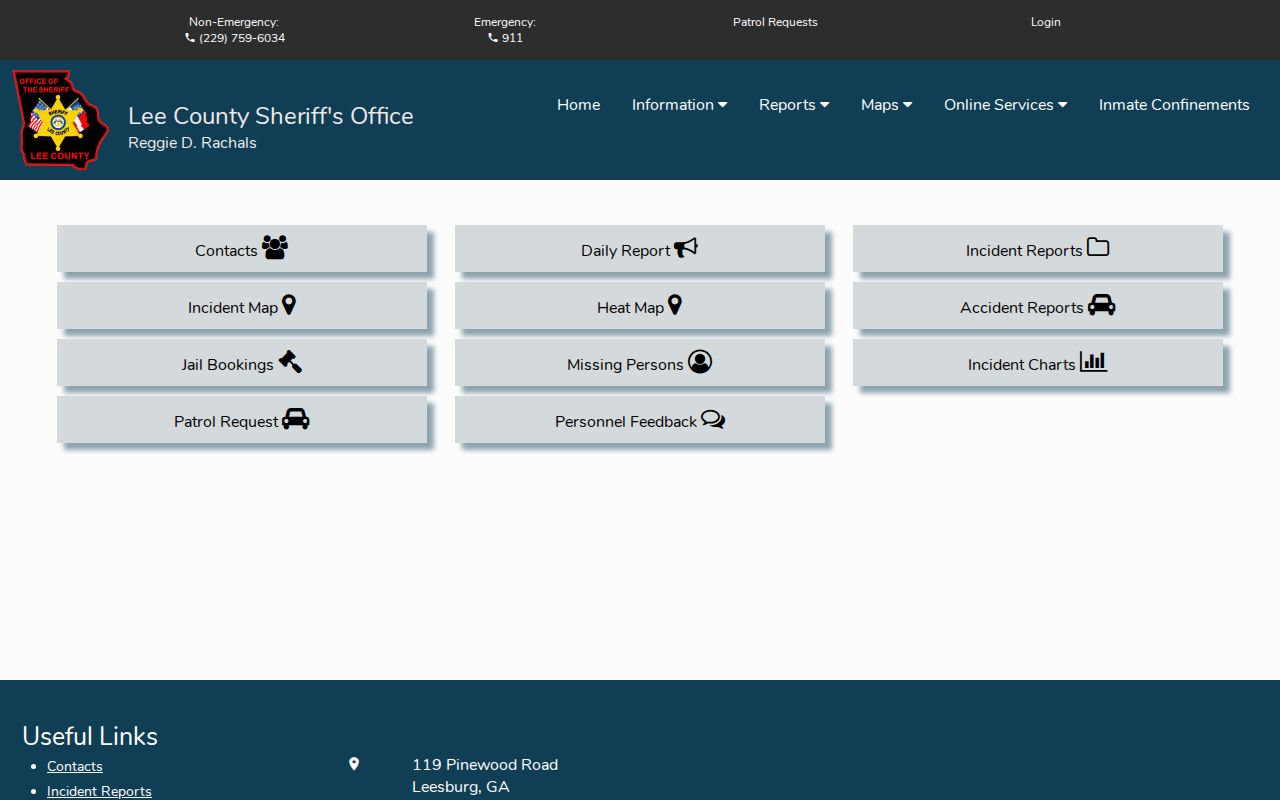
The menu draws a useful boundary. It is a public-safety interface, not a Lee County warrant lookup.
Types of Warrants in Lee County
The type of order points you to the right office. Lee County Magistrate Court handles applications for arrest and search warrants, along with bond and preliminary hearings. The Superior Court of Lee County holds general jurisdiction over felony criminal cases, and its clerk keeps the criminal cases and criminal warrants. Municipal courts take their own city traffic and ordinance matters. The terms you will hear locally are "bench warrant" and "failure-to-appear warrant."
| Warrant type | How it arises | Likely issuing authority |
|---|---|---|
| Arrest warrant | A judicial officer finds a lawful basis for arrest. | Magistrate or another authorized court |
| Bench warrant | A person misses court or fails to meet a court duty. | The judge handling that case |
| Search warrant | A judge authorizes a defined search after judicial review. | Magistrate or another authorized judge |
| Failure-to-appear warrant | A required traffic, ordinance, or criminal appearance is missed. | The court where appearance was due |
Lee County Courts Route Different Records
No single clerk holds every Lee County warrant record. The Lee County Courts directory splits things into Magistrate, Probate, and Superior Court. Magistrate Court is not a jury court or a court of record, but its published jurisdiction covers arrest and search-warrant issuance, bond hearings, and preliminary hearings. The Superior Clerk maintains Superior Court criminal warrants and criminal cases. Probate Court publishes county traffic-fine payment information, yet it is not a universal criminal-warrant index. City cases run on a separate track. Leesburg Municipal Court publishes its traffic, ordinance, failure-to-appear, payment, and DDS procedures. Smithville confirms it has a municipal court but posts no comparable warrant or payment process. Do not carry Leesburg's rules over to Smithville just because both cities sit inside Lee County.
What a Lee County Warrant Record Shows
Lee County publishes no sample warrant record for the public to study. A real record may hold some familiar fields, but only the controlling office can say what its record means right now. Local sources also show no universal warrant-number pattern. So ask about the source date, and ask whether the status was checked with the issuing court.
| Warrant identifier | The court or agency reference, if the source releases it. |
|---|---|
| Subject | The name tied to the order; use date of birth privately to separate common names. |
| Alleged offense | The charge or alleged conduct connected to the order, not a finding of guilt. |
| Issuing court | The court that controls judicial action on the warrant. |
| Bond | Terms set in the case, if public and applicable. No countywide bond schedule was located. |
| Status and timestamp | The reported state of the order as of a specific time. Confirm it with the court. |
Lee County Arrest Records Are Different
Citizen Connect's arrest search works off date ranges. It reports arrests, not current judicial status. A past arrest may have followed a warrant served long ago, or it may have happened with no public warrant entry at all. By the same token, an empty arrest result does not prove no warrant exists. A newly issued, sealed, court-specific, or otherwise restricted order may simply not appear. The official Lee County Sheriff page gives trusted contacts and describes how court orders are processed.
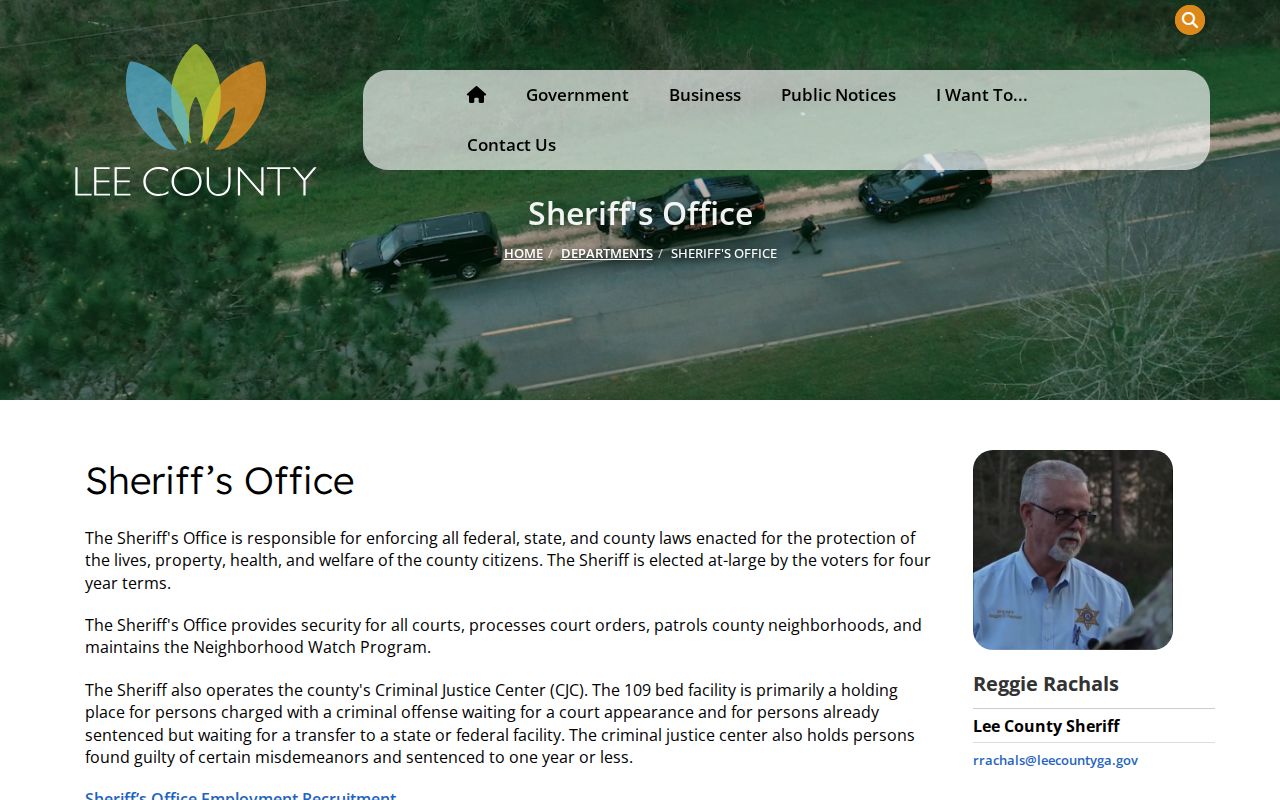
Use those details to confirm the right channel. Never turn a Lee County arrest result into a warrant claim.
Who Issues and Serves Lee County Warrants
A judge or other authorized judicial officer issues a warrant. Lee County Magistrate Court expressly lists arrest and search-warrant issuance among its duties. The sheriff processes court orders and provides court security. Leesburg police may execute warrants arising within city and police jurisdiction. The roles overlap in practice. Still, the court owns the order, while law enforcement handles service, custody, booking, and the records that follow.
The flow is simple in outline: application or affidavit → judicial review → issuance or denial → service or booking → first appearance, bond, or later court action → recall or disposition. The path depends on the court and alleged offense.
Lee County Sheriff’s Office
119 Pinewood Road
Leesburg, GA 31763
Non-emergency: (229) 759-6012
Main and Criminal Justice Center: (229) 759-3334
Lee County Magistrate Court
104 A Leslie Highway
Leesburg, GA 31763
(229) 759-6016 or (229) 759-6031
Lee County Sheriff Records Requests
A written request can seek an existing, identifiable, non-exempt sheriff record, or ask for a policy, procedure, or aggregate figure. It cannot ask a judge to recall a warrant. It is no fast substitute for a status check either. The county says it will contact the requester within three business days with a production timeline. That is just an initial response expectation, not a promise that records arrive within three days. The Lee County Sheriff Open Records portal accepts requests, tracks correspondence, and delivers responsive files.
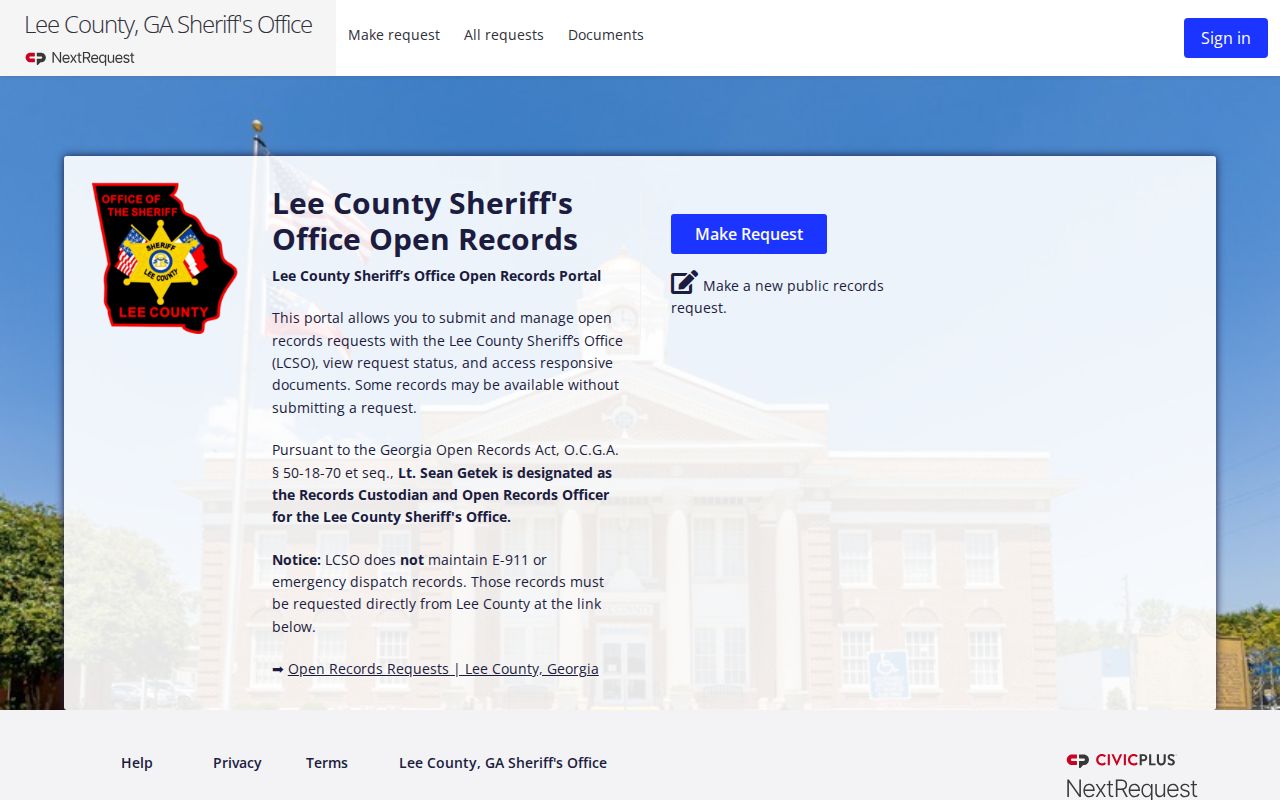
Use the portal to build a clear paper trail for your Lee County request. Name the record, the agency, the date range, and any case or citation reference you have. Leave out Social Security numbers and other needless personal data.
What to Do If You Have a Lee County Warrant
Start with the issuing court. Confirm the warrant's current status through an official Lee County channel, not a guess. Then talk to a Georgia lawyer about the smartest path forward. Depending on the case and the judge's direction, that path may mean a court appearance, voluntary surrender, bond, payment in an eligible citation case, or a motion asking the court to recall or quash the order. Recall means the court withdraws its outstanding order. Quash means the court sets the warrant aside. Neither happens just because someone requested a Lee County record. Leesburg adds a sharp local warning. Its citation page says an eligible active arrest warrant may be paid online. Even so, the person stays subject to arrest until the Municipal Judge accepts the payment and processes the case. Payment and immediate warrant clearance are not the same event. A DDS license consequence may also require a separate court release and DDS processing.
Important: Call counsel before appearing in person because Georgia warns that a person with a warrant may be taken into custody.
Lee County Warrant Terms in Plain Words
Status words mean little without a source and a date. Lee County courts publish no single binding glossary. Ask the issuing clerk what a term legally means in your own case.
- Active
- Reported as outstanding at the time the controlling source checked it.
- Served
- Law enforcement has executed the order; later court work may still remain.
- Recalled
- The issuing court has withdrawn the outstanding order.
- Bench warrant
- A judge’s order often tied to a missed appearance or unmet court duty.
- Sealed
- Restricted from ordinary public access under a court order or law.
Public Access to Lee County Warrant Records
The Georgia Open Records Act, O.C.G.A. §§50-18-70 et seq., leans toward public access. The law has limits. Exemptions, court seals, active-investigation rules, and privacy protections can block release. Juvenile records carry stricter confidentiality. An unserved warrant may also be withheld. In Lee County as anywhere, the act opens records an office holds; it cannot order a judge to alter a warrant.
Key rules:
The Georgia Open Records Act provides the general access framework and recognizes lawful exemptions.
The Lee County request policy explains routing, initial response timing, possible fees, and departmental custodians.
A court seal or juvenile confidentiality rule can block ordinary public access even when other case material is available.
Lee County Traffic Warrants Follow the Court
Georgia Courts reports no centralized statewide traffic-citation database. You must deal with the court named on the citation itself. Lee County Probate Court posts county traffic-fine payment routes. Leesburg Municipal Court publishes its own city procedures. Smithville posts no similar warrant or payment page. The sheriff keeps no public city traffic-warrant list.
A missed appearance may lead the court to issue a bench warrant and send an FTA notice to Georgia DDS. Court action and license reinstatement remain separate. The sequence may run citation → court date → failure to appear → possible bench warrant and DDS notice → court release → DDS processing. A payment receipt alone does not prove that every step is complete.
Lee County Records Request Fields
A tight request is easier for the records office to route. Name the record type and the office likely to hold it. Add a date range and any case or citation number you know. Ask for electronic copies when practical, and state your preferred response format. The Lee County office may send an estimate, withhold exempt material, or redact protected details. The official new-request form lays out the submission and format choices the sheriff accepts.
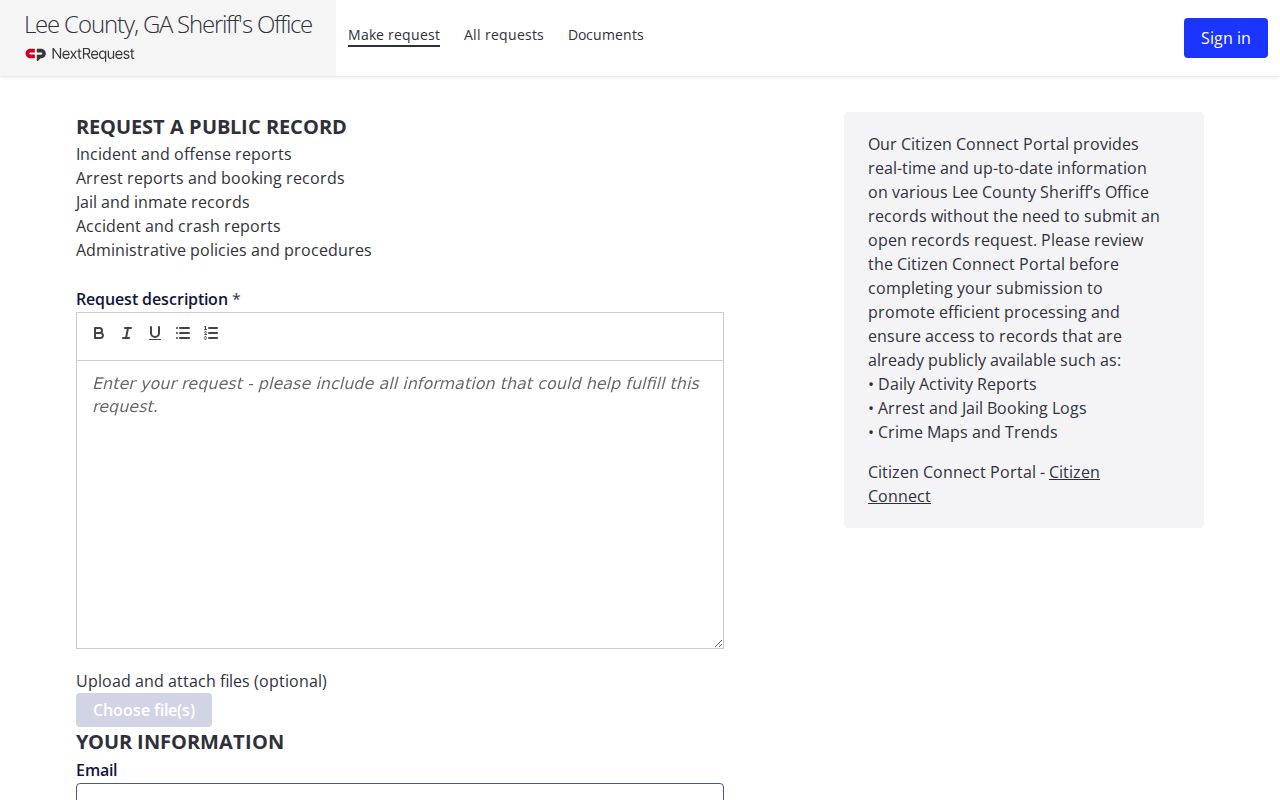
This route only fetches documents. For a live warrant answer, call the Lee County issuing clerk or sheriff at a published number.
Lee County Warrant and Custody Records
The Criminal Justice Center holds 109 beds. That capacity figure is not a warrant count for Lee County. Current confinement data tells you who is reported in custody. It does not show everyone with an outstanding warrant, everyone once arrested, or whether a past warrant was later recalled. Georgia Felon Search is a conviction-history service, not a warrant tool. Federal PACER gives docket access, not a complete federal-warrant index. Sealed or unserved federal warrants may be missing entirely. So keep each source inside its true scope. Use a booking record for custody history, a court docket for case events, and the issuing Lee County court or sheriff for current warrant direction. The source name, date, and status timestamp matter as much as the result.
Warrant Records by City in Lee County
Lee County counts two incorporated cities in the official 2020 Census place table: Leesburg and Smithville. Leesburg runs a municipal police and court route with detailed citation and failure-to-appear guidance. Smithville confirms its municipal court. It publishes little warrant procedure online. City records must stay tied to the city that owns the case.
Leesburg Warrant Records
Population 3,480 · Police and Municipal Court publish citation, bench-warrant, and DDS guidance.
Smithville Warrant Records
Population 593 · Municipal Court is confirmed; current procedure should be checked through the city.
Leesburg's rules do not travel to Smithville. For a county-issued warrant, use the Lee County court or sheriff contacts rather than a city payment route.