
The Lee County Most Wanted Program
No official Lee County “Most Wanted” roster or dedicated program page was located as of the September 8, 2026 research review. The Lee County Sheriff's Office page links its public contacts, Citizen Connect, Open Records, and state sex-offender resources. It does not link a current most-wanted list, a reward policy, a special tip form, or an update schedule.
That negative finding sets the rule for responsible use. This page describes and links official channels only. It never republishes a private person's name, photo, mugshot, alleged facts, address, or tip. A local news item or social post may be a one-time notice, but it is not a stable countywide roster and cannot establish current warrant status.
No Lee County Most Wanted Roster
The official sheriff page shows what the office actually offers: law enforcement, court security, court-order processing, patrol, the Criminal Justice Center, Citizen Connect, and records-request information. None of those labels is an official Lee County most-wanted roster. A general sheriff phone number should not be recast as a dedicated tip line.
The official sheriff source provides the current public contact block.
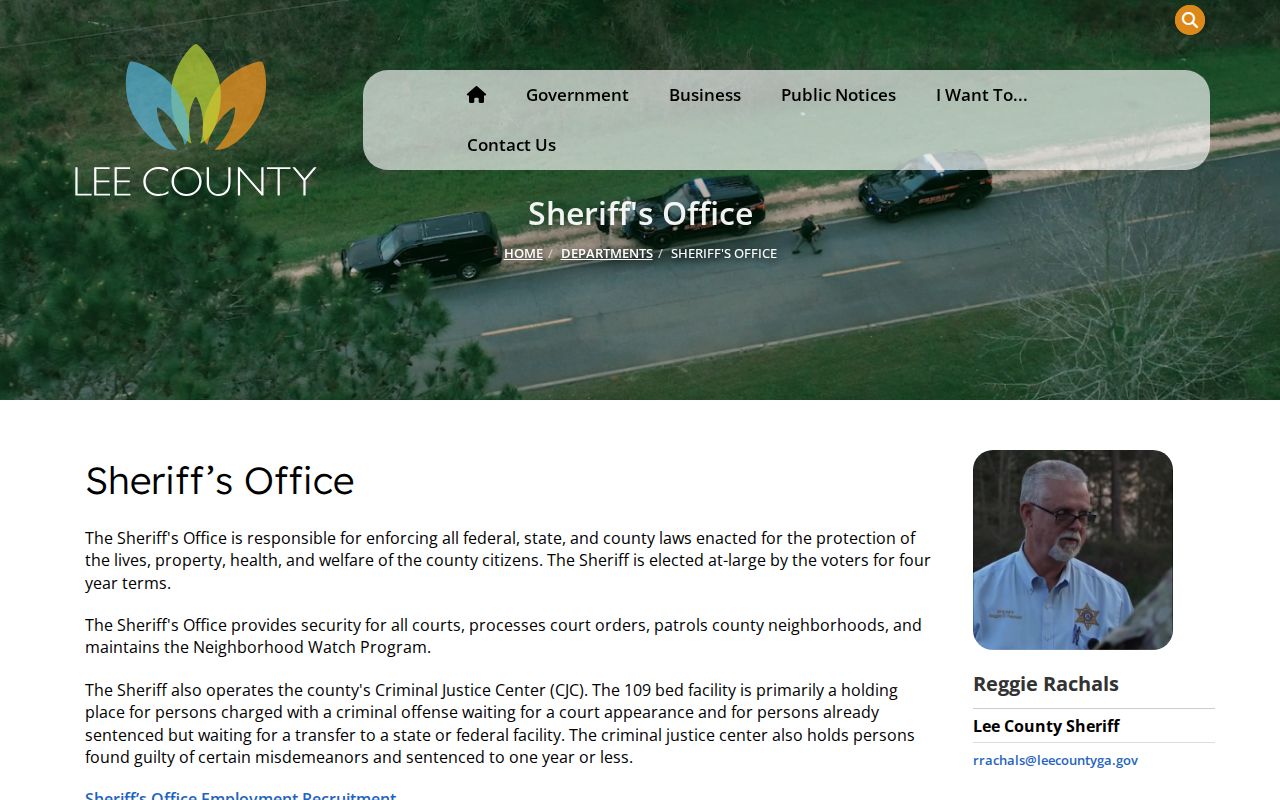
The capture supports directing readers to the sheriff for verification while stating plainly that no roster program was found.
Program status: No official Lee County roster, dedicated tip app, reward rule, or publication cadence was located.
How the Lists Work
Where an agency operates a most-wanted program, its list is usually a selected public notice rather than every open warrant. Lee County has not published the local criteria needed to say which cases would qualify, how often notices would refresh, or when an item would be removed. No such local process should be invented from another county's practice.
Warrant status can change through service, surrender, recall, court action, sealing, or a shift in jurisdiction. The issuing court controls the judicial record, while the sheriff or police may hold service and custody records. A static post can lag those events. Absence from a Lee County most-wanted page also proves nothing because no official roster page was found in the first place.
Note: A wanted notice is only a dated snapshot; confirm present status with the issuing court or Lee County Sheriff's Office.
Citizen Connect Has No Lee County Roster
The sheriff-linked Citizen Connect interface includes missing-person, arrest, confinement, incident, accident, chart, map, and other public-safety options. No most-wanted or warrant tab appeared during inspection. Its Arrest Search is date-based, while the confinement tools concern custody and charges. Neither is a substitute roster.
The menu capture documents the available public interface.
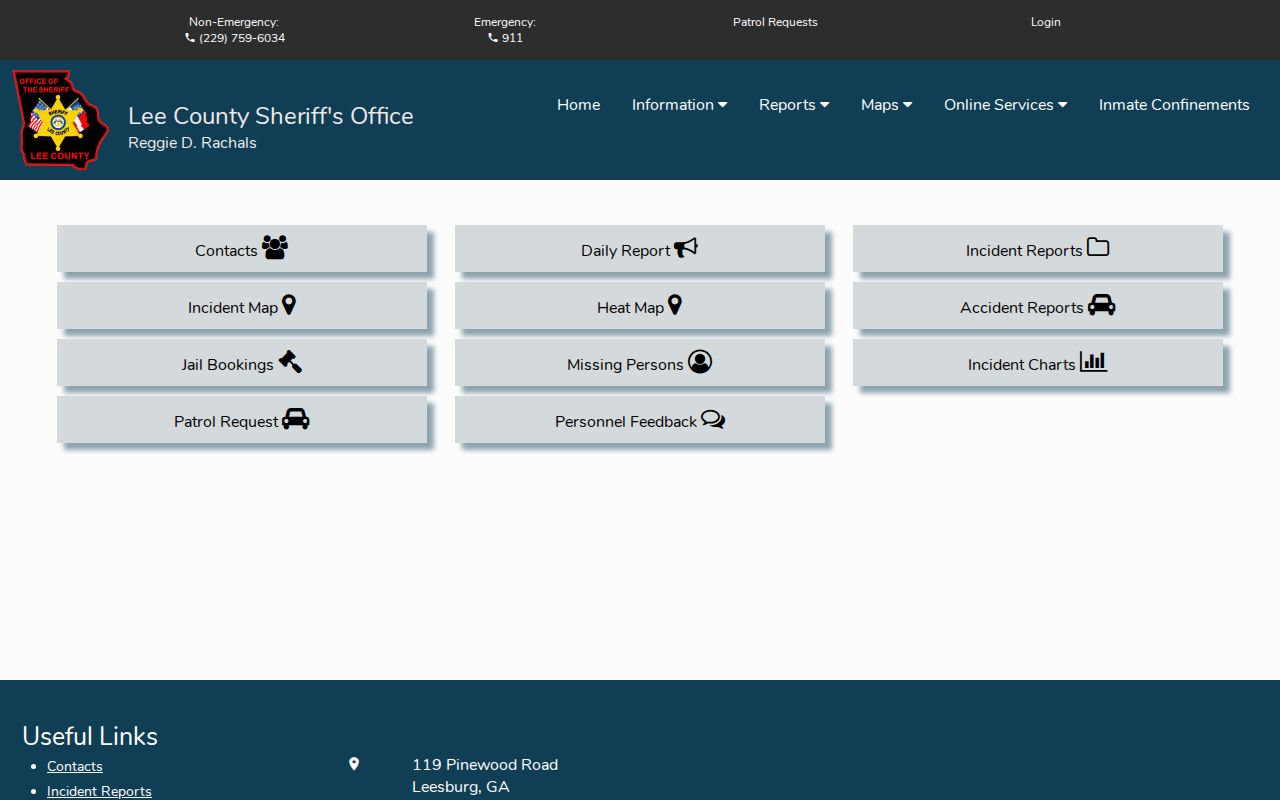
The screenshot shows why an arrest or booking result cannot be relabeled as a Lee County most-wanted entry.
A past arrest may mean a warrant was already served. A current confinement is a custody fact, not a full warrant history. Use each tool only for the record named on its screen.
How to Report a Tip Safely
Lee County publishes no dedicated most-wanted tip form, app, Crime Stoppers route, anonymity promise, or reward policy. Use the Sheriff's general non-emergency number, (229) 759-6012, to report non-urgent information or confirm the right agency. Call 911 only for an immediate emergency. Never promise a reward or anonymity that the county has not published.
- Verify that the notice came from an official law-enforcement or court source.
- Call the published sheriff non-emergency number, not a number copied from a social post.
- State the facts you observed without posting personal information in public.
- Do not approach, follow, detain, or confront anyone; let law enforcement assess the report.
- Follow the agency's instructions and do not assume a reward or anonymous process exists.
Key Point: Report through a published official channel and step back; Lee County has not published a dedicated anonymous reward program.
Lee County Joint Warrant Operations
A January 2026 WALB report described the Sheriff's first joint operations detail with Georgia Department of Corrections special agents. The report discussed attempted active-warrant service, warrants cleared, traffic stops, and activity in Leesburg and Smithville. Those aggregate facts show that warrant service is field work shared across agencies.
The January 2026 operations report is context, not a current status source. It is not an official roster, roundup registration page, or amnesty announcement. No individual names, photos, addresses, or allegations from the report belong here.
Later operations may be announced through official channels. Confirm the event, date, agency, and purpose before relying on it. A past enforcement detail does not create a standing promise about how a future Lee County warrant will be served.
Most Wanted vs an Active Warrant
A most-wanted list, when one exists, is a selected public communication. An active warrant is a judicial status that must be checked with the controlling court or law-enforcement office. Lee County publishes neither a most-wanted roster nor a full public active-warrant table, so a person cannot use one absent list to infer the other.
| Feature | Most Wanted List | Active Warrant |
|---|---|---|
| Scope | Selected notices if an agency runs a program | A current court order |
| Lee County access | No official roster found | No public countywide list found |
| Best verification | Official sheriff source | Issuing court and sheriff |
| Resolution | Confirm the underlying order | Court-specific appearance, bond, payment, or recall process |
No Lee County Warrant Amnesty
No official Lee County warrant amnesty, self-surrender registration, online clearance program, or warrant-roundup signup page was located. The 2026 joint detail was enforcement, not amnesty. A person should not treat a news account as an invitation to appear under special terms.
Standard resolution remains tied to the issuing court. Magistrate Court handles the warrant, bond, and preliminary functions stated on its official page. The Superior Court clerk maintains criminal warrants and cases for its court. Municipal courts control their own city matters. The sheriff can address service and routing but cannot recall a judge's order.
If someone claims a special program exists, ask for its official government announcement, eligibility rules, dates, location, and court procedure. Until those details are published, use counsel and the usual court channel.
If You Believe You Are on a List
Someone who believes a Lee County wanted notice concerns them should not rely on reposts or contact the person who shared one. A Georgia lawyer can check the issuing court, confirm whether a warrant exists, and ask about a safe surrender, first appearance, or bond process. State guidance warns that an in-person warrant inquiry can lead to custody.
Use the Sheriff's published non-emergency number and the court shown on any official document. The Superior Court clerk can be reached at (229) 759-6018; Magistrate Court uses (229) 759-6016 and (229) 759-6031. No general Lee County bond schedule or online clearance tool was found. The Lee County active warrants page explains the status-check route in more depth.
Important: Consult an attorney before appearing; official Georgia guidance warns that a person with a warrant may be taken into custody.
Lee County Warrant Scam Warnings
Scammers use warrant and jury-duty claims to create fear. A March 2026 report relayed a Lee County Sheriff warning that the office does not call to demand payment or threaten arrest by phone. A regional 2025 warning also said law enforcement does not demand gift cards, prepaid cards, mobile transfers, or cryptocurrency to stop warrant service.
End the call and verify through the official sheriff page. Do not trust caller ID, a link in a text, or a phone number supplied by the caller. Never share a relative's location, identification data, or financial details with an unverified contact.
A real records question can also go through the Sheriff's NextRequest portal, but an Open Records request does not clear a warrant or authorize a payment. Current status belongs to the court and law-enforcement channels.