
Active Warrants in Lee County
An active warrant in Lee County is a court order still open when the issuing court or law enforcement checks it. The label says nothing about timing. It does not mean a fresh arrest. It also will not show whether the person is confined, whether bond has been set, or what a judge may require next. Status can shift fast. Service, a court appearance, payment in an eligible city case, or a judge's recall or quash order can close it out. Lee County publishes no countywide active-warrant list. The Lee County Sheriff's Office processes court orders and runs the Criminal Justice Center, but its public page posts no warrant table and no direct warrant-unit line. For a current answer, call the sheriff's non-emergency line at (229) 759-6012, then reach the court that owns the case.
Lee County Has No Public List
The sheriff-linked Citizen Connect menu offers arrest, confinement, incident, accident, map, and other public-safety tools. There is no warrant tab. Each screen reports one thing: arrest events, custody, or calls and cases. None inventories unserved Lee County active warrants.
Key point: No hit in Citizen Connect does not prove that no active warrant exists in Lee County.
The official Lee County sheriff page shows the office's duties and public contacts; view the source for its service role.
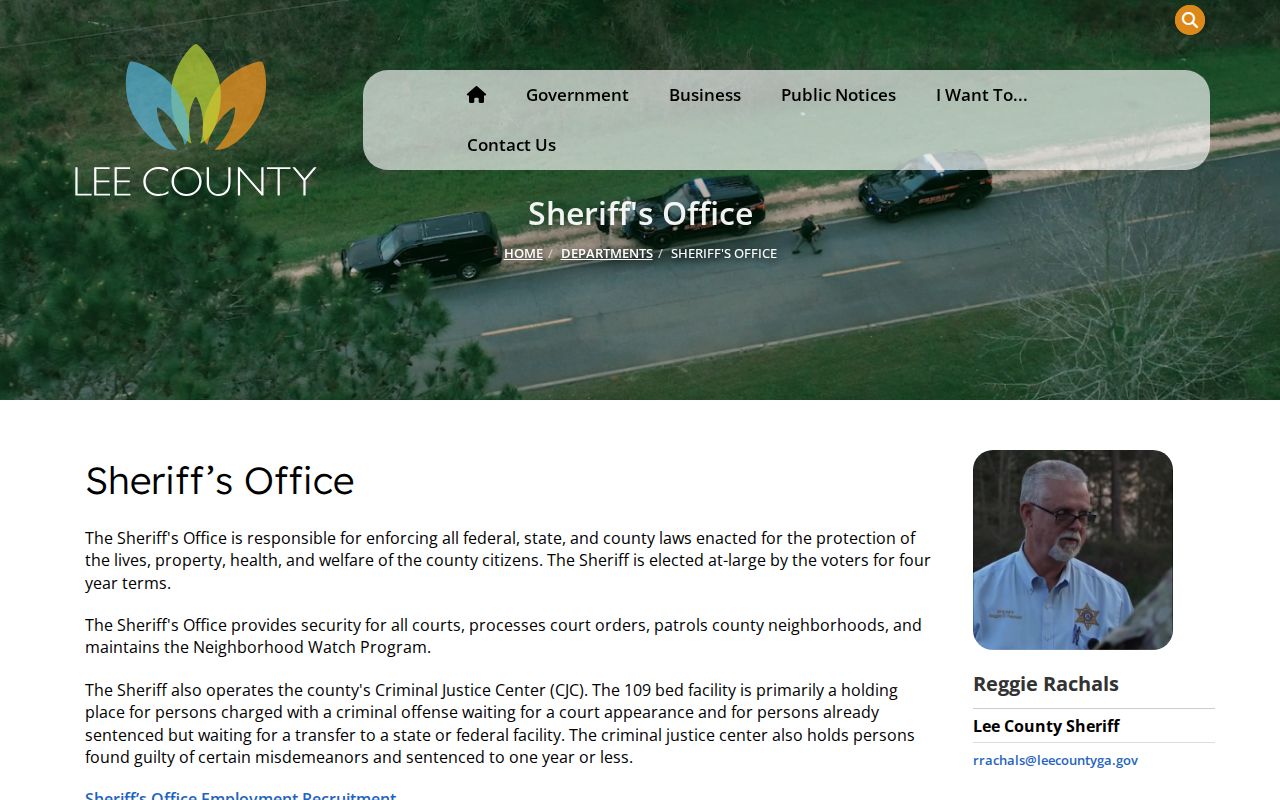
The county's own page points warrant questions to the sheriff for routing and service. It hosts no public Lee County warrant list.
How the Lee County Active Warrant List Works
Lee County posts no countywide active warrant list, so there is no public update schedule or coverage promise to lean on. The courts build and change the controlling judicial records. The sheriff may hold service or custody records on its end. Leesburg Municipal Court controls its city traffic and ordinance cases, and Smithville's official pages confirm a municipal court but offer no warrant lookup procedure. One web search cannot stitch those sources together. Start with the court named on your citation, notice, or case paper. For county warrant application, first-appearance, bond, or preliminary-hearing questions, call Magistrate Court at (229) 759-6016 or (229) 759-6031. The Superior Court clerk, whose page says the office maintains criminal warrants and criminal cases, can route records questions at (229) 759-6018.
Note: Lee County publishes no refresh cadence, so absence from a web interface can never settle current active-warrant status.
Citizen Connect Is Not a Warrant Search
Citizen Connect helps when its record type fits your question. The arrest screen works from a date range. The confinement area covers current confinements, admits, charges, arresting agency, and limited date ranges. The incident tool accepts an incident number, dates, a name, or a location. None of the Lee County screens offers a warrant number, issuing court, issue date, or warrant-status field. The official Citizen Connect source shows the full menu of options.
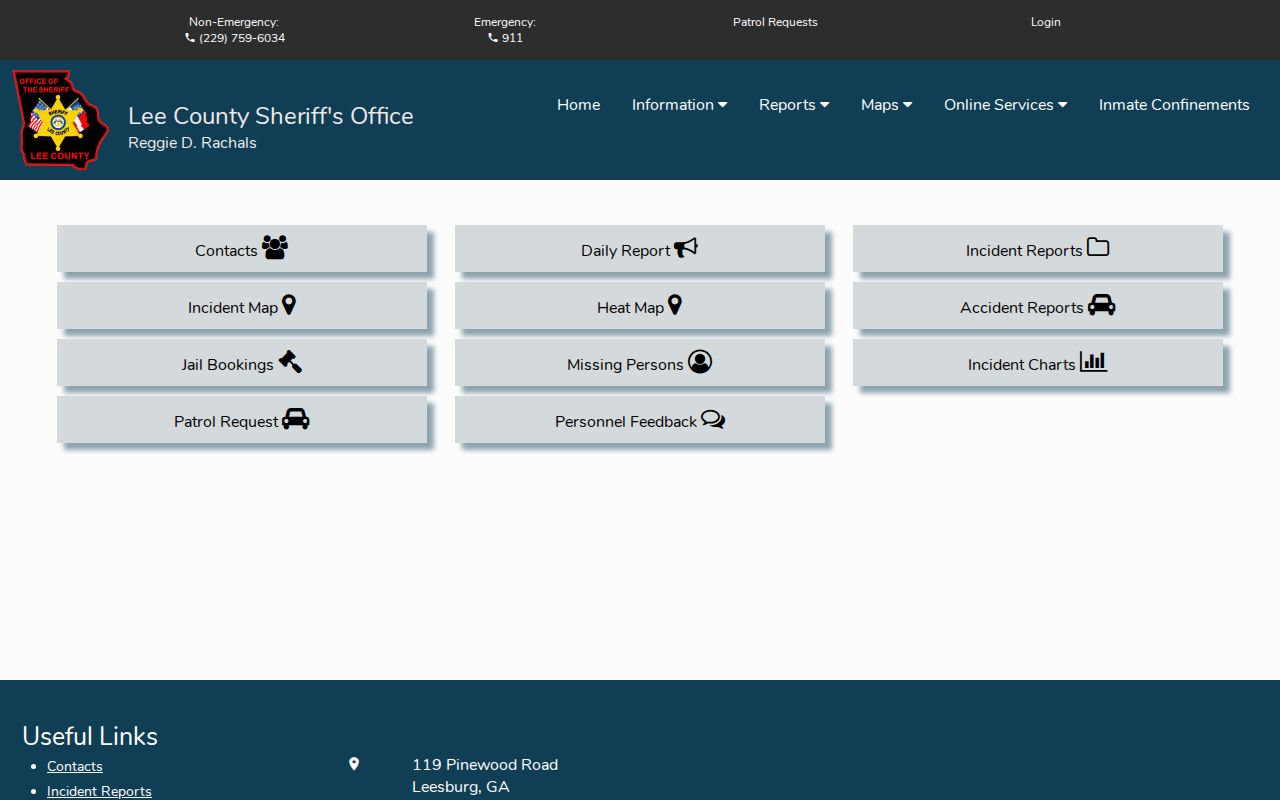
The menu shows what the public system covers, and it offers no active-warrant option. The separate Citizen Connect Arrest Search makes the record boundary even plainer.
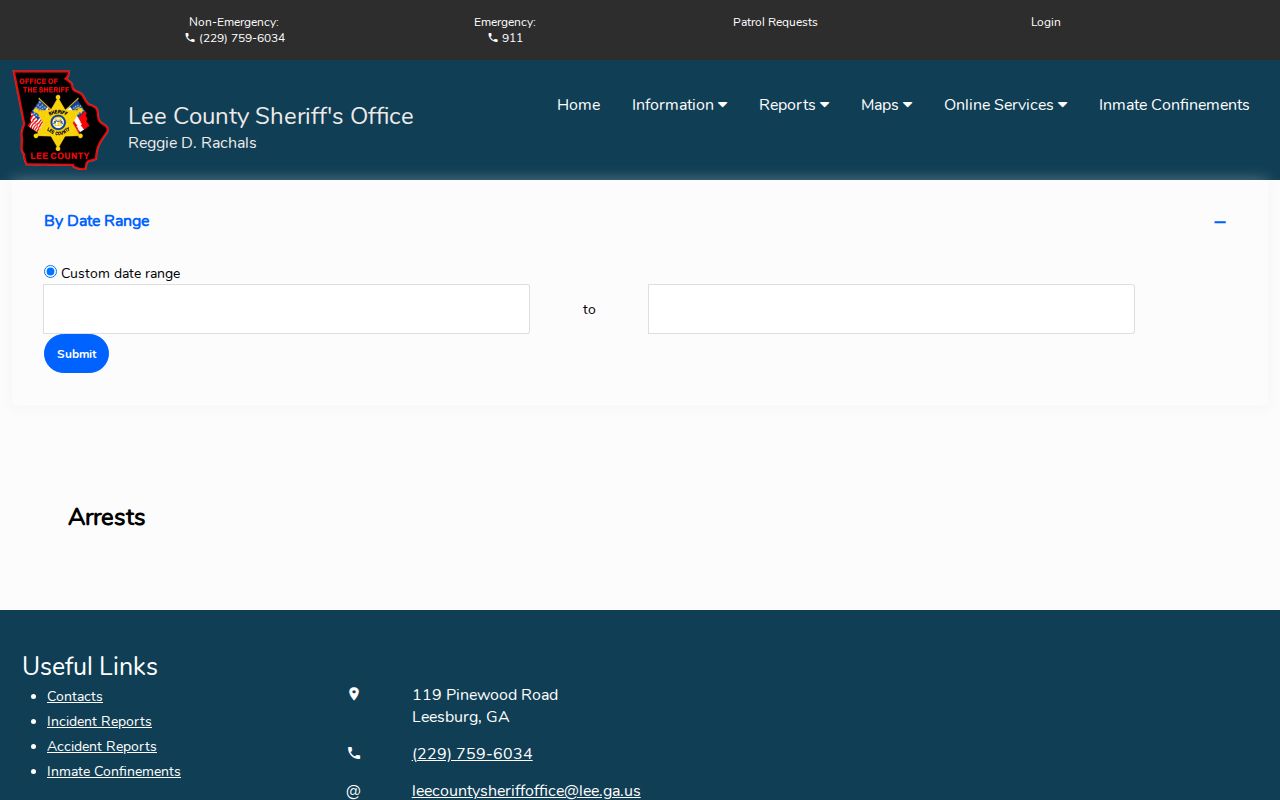
Its date-range controls reach past arrest events only. There is no warrant number, issuing court, or active-status field. A past arrest may trace to a warrant already served. A current jail entry says someone is confined, not what each court did. Read every result as its labeled record, and get active status from the controlling Lee County office.
What an Active Warrant Shows
Lee County publishes no sample warrant record to copy from. Any official record that gets released will carry neutral fields that show its scope. Some may be withheld, redacted, or missing. Check the source date, because active status can change after a copy is made.
| Record type | Whether the document concerns an arrest warrant, bench warrant, search warrant, or another court process. |
|---|---|
| Issuing court | The Lee County or municipal court that owns the order and can explain its procedure. |
| Case or citation identifier | The court's identifier, if released. No local sample format was verified. |
| Issue date | The date of judicial action, which is not the same as an arrest date. |
| Status as of | The stated active, served, recalled, or other status at a named time. |
| Clearing contact | The issuing court or office that can give the next official step. |
Confirm Lee County Warrant Status
With no single public database, a direct check runs through several official Lee County routes. Have the full name and date of birth ready if asked. Keep sensitive identifiers away from unofficial forms.
- Read the citation, notice, or prior court paper and identify the issuing court.
- Call the Lee County Sheriff's non-emergency line for law-enforcement routing, especially when the court is unknown.
- Contact Magistrate Court for its warrant, bond, and preliminary-hearing process, or the Superior Court clerk for records it maintains.
- For a city matter, call Leesburg Municipal Court at (229) 759-6465 or confirm Smithville's route through its main city office.
- For an existing document, file a narrow Open Records request with the office that holds it.
Georgia runs no single statewide warrant-search portal. The Georgia Courts traffic page likewise reports no centralized traffic citation database. Calling the court is not a backup here; it is the core Lee County active-warrant search path.
Most-Wanted Lists and Warrant Roundups
Lee County posts no public most-wanted roster, and no office there runs an amnesty program or roundup sign-up. Warrant service still happens. A January 2026 local report described a joint operation by the Lee County Sheriff and the Georgia Department of Corrections, with attempts to serve warrants in Leesburg and Smithville. That was one sweep, though, not a standing warrant lookup residents can search.
Key Point: With no official Lee County roster published, check names, photos, and warrant details with the sheriff or the issuing court rather than any third-party list.
Use the official sheriff page for current channels and verify any later program announcement at its government source.
Request a Lee County Warrant Record
A Lee County records request works best when you know what you want from it. It can pull an existing document, a policy, or a tally. It cannot force an office to build a fresh warrant database. It also cannot tell you whether a warrant is live today. For present status, go straight to the court or the sheriff. For a kept copy, file the request. The Sheriff's NextRequest portal handles the filing. It carries the correspondence, sends status updates, shows cost estimates, and delivers electronic records that answer the ask. The county says the holding department makes contact within three business days with a production timeline. Write the ask narrowly: name the office, the record type, the date range you know, and any case identifier. Georgia Open Records Act exemptions, redaction, search costs, and court confidentiality rules can all limit what comes back. Juvenile and sealed material faces tighter limits. One caution applies. A reply saying no responsive public record exists is not a court finding that no active warrant exists in Lee County. Only live confirmation settles that question.
If Your Name Is on the List
An official office has just confirmed an active warrant in your name. First, ask which court issued it. Then ask what that court requires. A Lee County warrant might call for an appearance, a surrender, a bond hearing, eligible payment, or a request for judicial recall. Court action belongs to the court alone. The sheriff cannot promise to recall a judge's order. A records request cannot clear one either. Talk to a Georgia lawyer before you walk in. State guidance warns that some offices demand an in-person visit, and a person who appears under a warrant may be taken into custody. Ask ahead about identification, location, timing, bond procedure, and whether counsel can address the court first. Lee County publishes no countywide bond schedule, no warrant window, no walk-in recall process, and no general payment portal. The Lee County warrant records overview lays out the court-specific resolution routes.
Important: Confirm the issuing court and seek legal advice before appearing, since an active warrant can lead to immediate custody.
Lee County Warrant Scam Checks
No one in Lee County erases a warrant through a phone payment. Hang up on any caller who says otherwise. Regional warnings are blunt about it. Law enforcement does not turn warrant service into a demand for gift cards, prepaid cards, mobile payments, or cryptocurrency. A March 2026 report relayed a Lee County Sheriff's warning about callers using jury-duty and warrant threats to squeeze money out of people. After you end the call, verify with a number from an official government page. The Sheriff's non-emergency line is (229) 759-6012. The Superior Court clerk's published number is (229) 759-6018. Skip caller ID, skip links the caller sends, skip numbers left in a voicemail. Real payment rules stay court-specific in Lee County. Leesburg's eligible citation process still requires judge acceptance and processing before an active warrant risk ends.